



 admission@niet.co.in
 +91-8010-500-700

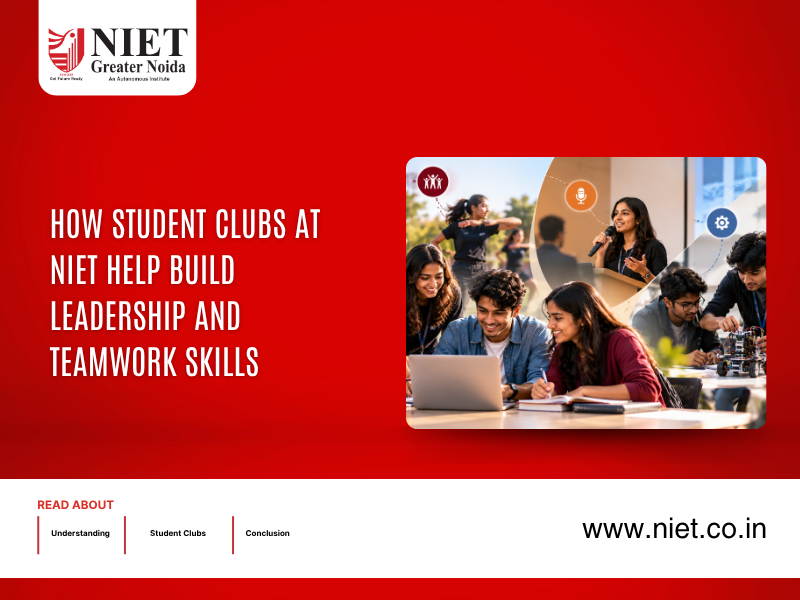
College education goes beyond classroom learning, assignments, and examinations. Participation in student clubs allows learners to explore their interests, collaborate with peers, and develop skills that support their academic and professional growth. From organising events to working on group projects, these experiences encourage student development by helping learners become more confident, responsible, and adaptable. At NIET, involvement in campus activities can provide opportunities to strengthen leadership skills, improve collaboration, and prepare for future workplace challenges.
Why Student Clubs Matter in College Life
Student clubs create spaces where students can connect with others who share similar interests. Whether focused on technology, entrepreneurship, culture, communication, or social initiatives, these groups encourage students to participate actively in campus life.
Unlike conventional classroom activities, club participation often requires students to take initiative, share ideas, manage responsibilities, and work towards common goals. These experiences make college clubs an important part of a well-rounded educational journey. They also encourage students to discover their strengths, explore new interests, and develop confidence through practical experiences.
How Student Clubs Develop Leadership Skills
Leadership involves more than assigning tasks or directing a group. It requires responsibility, decision-making, planning, and the ability to motivate others.
Through NIET student clubs, learners can get opportunities to coordinate activities, support event planning, manage schedules, and contribute to group decisions. Taking responsibility for a project or helping organise an event can teach students how to plan effectively, handle challenges, and remain accountable for outcomes.
These experiences gradually strengthen leadership skills and encourage students to become proactive. They also help learners understand the importance of listening to different perspectives, resolving disagreements, and making thoughtful decisions.
Building Teamwork Through Collaborative Activities
Most academic projects and professional assignments require people to work together. Student clubs offer opportunities to practise collaboration in a supportive environment.
Members may divide tasks, coordinate schedules, exchange ideas, and contribute different strengths towards a shared objective. These interactions help students understand how individual contributions influence overall team performance.
Participation in college clubs can also teach students to respect different opinions, manage conflicts constructively, and adapt when plans change. Such experiences strengthen teamwork skills, which are valuable in both academic projects and professional environments.
Strengthening Communication and Problem-Solving
Effective communication is essential for successful teamwork and leadership. Students involved in college campus activities often need to present ideas, coordinate with peers, communicate plans, and discuss solutions when challenges arise.
These experiences can improve communication skills by encouraging students to express themselves clearly, listen actively, and respond thoughtfully. Planning an event, for example, may involve managing unexpected changes, coordinating resources, or finding alternative solutions within a deadline.
By navigating such situations, students gain practical experience in decision-making and problem-solving. This form of skill development helps them become more comfortable handling responsibilities and working with different people.
The Role of Extracurricular Activities in Student Development
Participating in extracurricular activities allows students to explore interests beyond their academic specialisations. Cultural events, competitions, technical workshops, volunteering initiatives, and student-led programmes can encourage creativity, discipline, and cooperation.
These activities can also help students discover abilities they may not have recognised through classroom learning alone. For instance, coordinating a cultural event may develop organisational skills, while participating in a technical club can encourage analytical thinking and collaboration.
A balanced combination of academics and extracurricular activities can contribute to holistic student development, helping learners build confidence while gaining broader experiences.
How NIET Student Clubs Support Holistic Growth
At the Noida Institute of Engineering and Technology (NIET), participation in campus initiatives and NIET student clubs can complement academic learning by encouraging students to explore interests, collaborate with peers, and take on responsibilities. Through meaningful involvement in college campus activities, students can work towards strengthening leadership skills, teamwork skills, and communication skills. These experiences can contribute to their overall skill development and help them approach future academic and professional opportunities with greater confidence.
Conclusion
Student clubs play an important role in creating opportunities for learning beyond the classroom. By encouraging collaboration, responsibility, and active participation, student clubs can help learners develop leadership skills, improve teamwork skills, and strengthen communication skills. At NIET, involvement in college clubs and extracurricular activities can support well-rounded student development, helping students build practical abilities that remain valuable throughout their academic journey and future careers.
Frequently Asked Questions
1. What are student clubs in colleges?
Student clubs are groups that bring students together around shared interests, such as technology, culture, entrepreneurship, sports, or social activities.
2. How do student clubs help develop leadership skills?
They provide opportunities to organise activities, coordinate teams, make decisions, manage responsibilities, and learn from practical experiences.
3. Why are teamwork skills important for students?
Teamwork skills help students collaborate effectively, share responsibilities, respect different perspectives, and work towards common goals.
4. Can extracurricular activities improve communication skills?
Yes. Presentations, group discussions, event planning, and collaborative activities can help students express ideas clearly and become better listeners.
5. How can students benefit from joining college clubs?
Joining college clubs can help students explore interests, build friendships, gain confidence, improve practical skills, and contribute to their overall personal and professional development.


